1. Blog
  2. Article

Canonical
on 11 March 2015
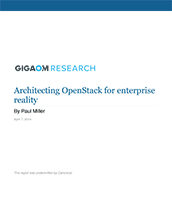
Architecting OpenStack for enterprise reality


With OpenStack becoming more and more popular as a cloud-building technology for enterprises, companies are asking themselves several important questions. How viable is OpenStack as an enterprise platform? Is it possible (and feasible) to integrate it with existing virtualisation infrastructure, e.g. vSphere from VMware? Is there a business case for such integration, and what are the risks and challenges associated with it? Finally, how do they best utilise OpenStack: is the “vanilla” architecture always the best approach, or is there a case for swapping out certain components for third-party tools?

Gigaom analyst Paul Miller looks at these questions and more in this report sponsored by Canonical. For a more in-depth look at integrating vSphere and OpenStack, you may also want to read this whitepaper.
Download eBook

Related posts


Pedro Lazzarotto
11 June 2026

AI at the edge: simplifying infrastructure with Cisco and Canonical

AI Article

Legacy infrastructure was not designed for the requirements of the AI era. While large-scale model training remains centralized in data centers, test-time inference is rapidly shifting to the edge to reduce latency and bandwidth consumption. This shift creates a new frontier for enterprise AI, but deploying at the edge introduces signific ...


estelacarmona
11 June 2026

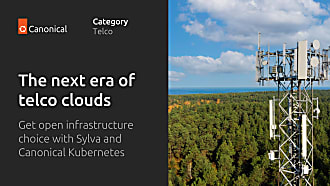
The next era of telco clouds: get open infrastructure choice with Sylva and Canonical Kubernetes

5G Article

Achieving vendor neutrality in telco clouds requires an infrastructure layer that respects open standards, without wrapping them in rigid platform layers. By combining upstream alignment with up to 15 years of support longevity, Canonical’s approach to Sylva is built around a requirement that matters deeply to telcos: follow upstream clou ...


Benjamin Ryzman
9 June 2026

What is RDMA over Converged Ethernet (RoCE)?

AI Networking

Previous articles walked through RDMA (Remote Direct Memory Access) as a programming model and InfiniBand as the fabric that was built around it. Both led to the same conclusion, even if it was never stated outright: moving data, not compute, becomes the bottleneck once systems scale. So what happens when you want RDMA, but you’re ...